Modern SEO: Strategies to Grow Your Website in 2026
Search Engine is not repeated of doing 100 of backlink its changed over the year. Today, successful SEO focuses on helpful content, user experience, technical performance, search intent, and website authority.
Businesses that want sustainable organic traffic need to understand how modern search works and create strategies that benefit both users and search engines.
And Try to understand that How google work
And what are Google policies for website for ranking.
1. What Is Modern SEO?
Modern SEO is the process of upgrading a website so it can appear more confidently for relevant searches while providing a useful experience for visitors. Search engines consider many signals when deciding which pages deserve visibility.
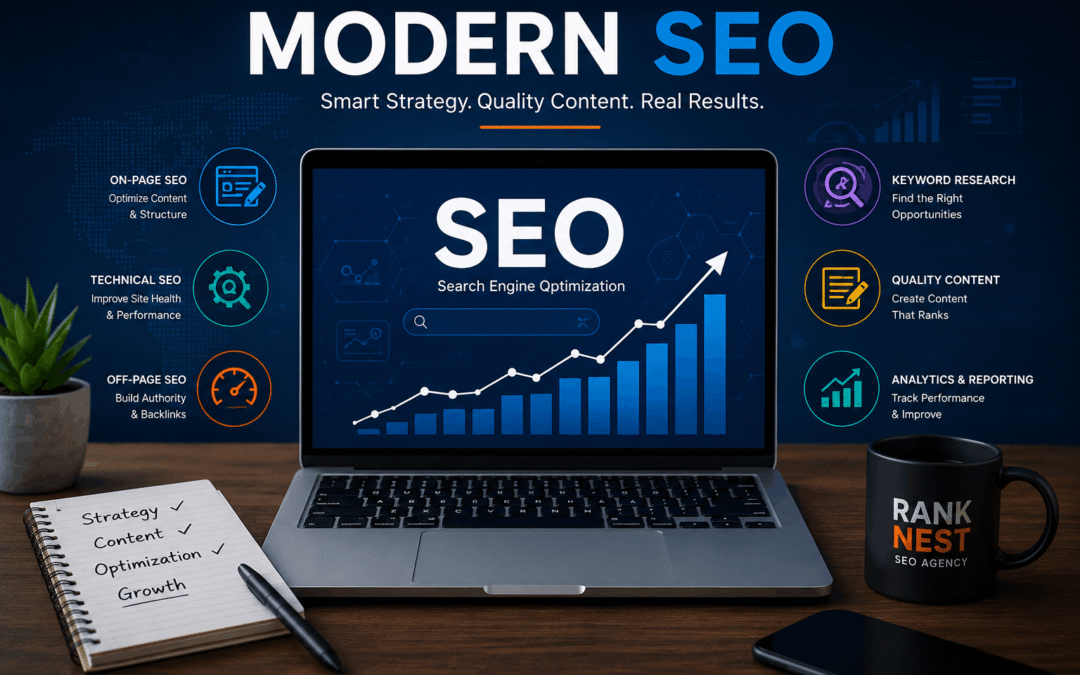
A modern SEO strategy combines keyword research, high-quality content, technical optimization, internal linking, structured data, and authority building. The goal is not simply to rank for keywords but to attract visitors who are genuinely interested in what your business offers.
2. Search Intent Comes First
Understanding search intent is one of the most important parts of modern SEO. Before creating a page, determine what the searcher actually wants.
Someone searching “what is technical SEO” probably wants information, while someone searching “technical SEO services” may be looking for a service provider. Creating the right type of content for each search intent can make your pages more relevant and useful.
Instead of forcing keywords into an article, focus on answering the questions behind those searches.
3. Create Helpful and Original Content
Modern SEO rewards content that genuinely helps people. Your articles should provide clear answers, useful examples, practical advice, and information that adds something valuable to the topic.
Avoid creating pages simply to target hundreds of similar keywords. Build comprehensive resources around important topics and update older content when information becomes outdated.
Good content should be easy to read, logically organized, and written for humans first.
4. Technical SEO Still Matters
Even excellent content can struggle if search engines cannot properly access or understand your website. Technical SEO provides the foundation for organic growth.
Important areas include website speed, mobile responsiveness, crawlability, indexing, HTTPS, XML sitemaps, canonical URLs, redirects, and broken links.
You should also monitor Core Web Vitals and make sure visitors can navigate your website easily across different devices.
5. Build Real Website Authority
Backlinks remain an important part of SEO, but modern link building should focus on quality and relevance rather than quantity.
Instead of buying large numbers of low-quality links, create useful resources that other websites want to reference. Guest posting, digital PR, industry partnerships, original research, and valuable content can help earn relevant links naturally.
A smaller number of strong, relevant links can be more valuable than hundreds of unrelated ones.
6. Optimize for Users and New Search Experiences
Search is becoming more mutual action, so businesses should think beyond traditional blue links. Clear answers, structured content,give answer to the question , and trustworthy information can help your website remain useful across changing search experiences.
Make important information easy to find. Use descriptive headings, concise answers, relevant internal links, and well-structured pages.
Most importantly, give visitors a reason to choose your website over competing results.
7. Measure SEO and Improve Continuously
Modern SEO needs daily base measurement. Use tools such as Google Search Console and analytics platforms to monitor impressions, clicks, rankings, organic traffic, and user behavior.
Look for pages that receive impressions but few clicks, keywords ranking on the second page, and content that has started losing traffic. These areas can provide excellent optimization opportunities.
SEO is not a one-time task. Search trends, competitors, technology, and user expectations continue to change. By regularly analyzing performance and improving your website, you can build stronger visibility and sustainable organic growth.